
The Bologna Quadrilatero: The History of the City’s Oldest Market
From medieval guilds to today’s historic shops: a journey through Bologna’s gastronomic and commercial heart, amidst narrow alleys, porticoes, and centuries-old traditions
In the historic center of Bologna, there is a place where commerce has continued almost uninterrupted since the Middle Ages. This is the Quadrilatero, a network of streets stretching behind Piazza Maggiore which, to this day, represents one of the most recognizable symbols of the city.
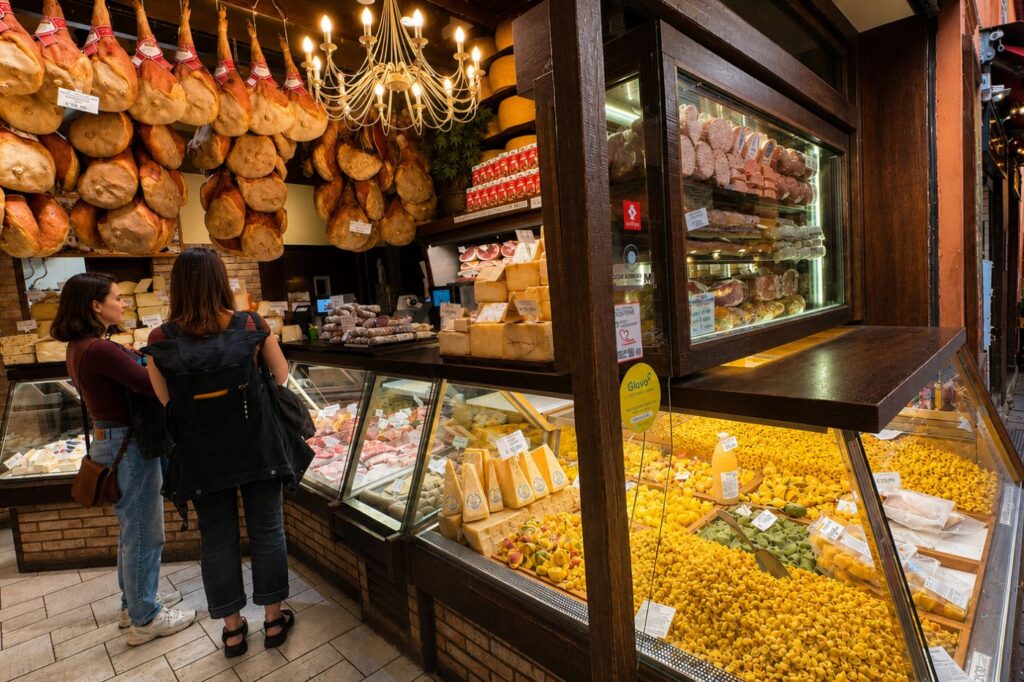
Amid historic delicatessens, fresh pasta workshops, fishmongers, ancient osterie (taverns), and botteghe (specialty food shops), the Quadrilatero preserves an identity shaped by centuries of urban history, commercial trade, and gastronomic culture.
Today it is one of the most visited areas by both Italian and foreign tourists, yet it remains above all a living neighborhood, still tied to the daily habits of the locals. Within its narrow alleys, one encounters remnants of the Middle Ages, artisanal traditions, new commercial venues, and a food culture that continues to intertwine with the market’s original function.
A stroll through these streets offers a meaningful insight into Bologna’s economic history and its gastronomic reputation. For this reason, telling the story of the Quadrilatero means starting from the relationship between the city, its commerce, and its food.
The Quadrilatero: Bologna’s Oldest Market
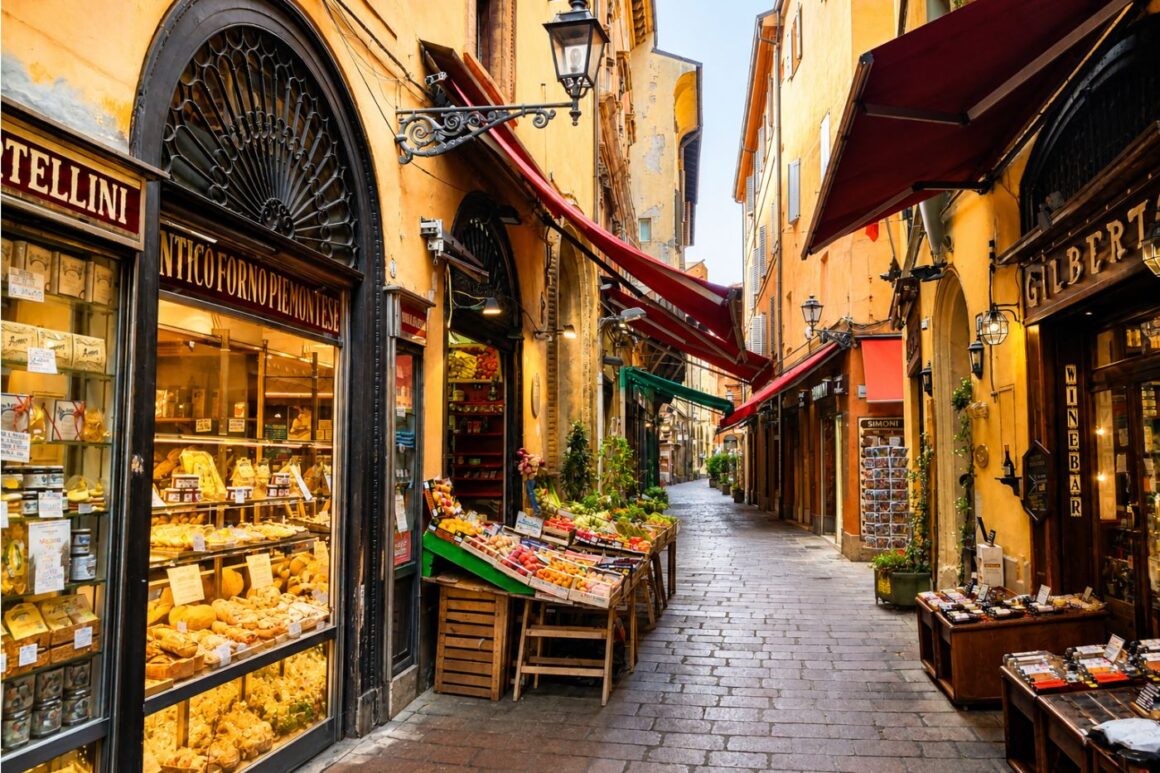
The Quadrilatero is Bologna’s oldest market and occupies an area of the historic center roughly bordered by Via Rizzoli, Via Castiglione, Via Farini, and Via dell’Archiginnasio. Within this perimeter unfolds a maze of narrow streets that are among the most famous and popular in the city, such as Via Pescherie Vecchie, Via Drapperie, Via Clavature, and Vicolo Ranocchi.
The name “Quadrilatero” is relatively recent, but the commercial function of this area dates back at least to the 11th century. In fact, during the Middle Ages, the most important mercantile and artisanal activities of communal Bologna were concentrated here.
The location was strategic because the market stood adjacent to the political and religious heart of the city, near Piazza Maggiore and the Basilica of San Petronio. Between the 12th and 13th centuries, Bologna was one of Europe’s leading economic and cultural hubs — thanks in part to the presence of the Western world’s oldest university — and where the food trade took on a central role in urban life.
The Medieval Origins of the Bolognese Market
Historical sources testify that as early as the Middle Ages, this area was organized according to a precise division of commercial activities. Bologna was then a wealthy, populous city, traversed by intense economic traffic. The guilds (Corporazioni delle Arti) strictly regulated the trades, establishing rules, prices, and quality standards of goods.
The Quadrilatero was born precisely as a specialized marketplace where each street was dedicated to a specific professional category. Many current street names still derive from those medieval trades.
Via Drapperie was home to drapers and textile merchants; Via Clavature housed blacksmiths and ironworkers (chiavaturieri); Via Pescherie Vecchie was reserved for the fish trade. Shops opened directly onto the porticoes, with goods displayed outside and a constant flow of customers, merchants, and townspeople.
This layout of the Quadrilatero perfectly reflects the economic organization of Italian communal cities. The guilds, in addition to being professional associations, represented true centers of economic and social power. In this maze of alleys, therefore, one of the earliest examples of a stable and specialized urban market in medieval Italy developed.
Guilds, Arts, and the Food Trade
In medieval Bologna, the guilds held enormous importance in the city’s governance. Each professional category was organized into guilds that controlled access to the trade, product quality, and sales methods.
The Quadrilatero was primarily home to food merchants, apothecaries, butchers, fishmongers, bakers, and cured meat vendors. Over the centuries, Bologna became famous for its pork processing, earning itself the nickname “Bologna la Grassa” (Bologna the Fat).
Mortadella, already well-known in the Renaissance era, was one of the market’s signature products. Alongside cured meats, local cheeses, wines from the Colli Bolognesi, bread, and fresh pasta were sold.
The fish trade also held considerable importance, despite Bologna not being a maritime city. In fact, the commercial links with the Adriatic Sea allowed for the regular arrival of fresh fish destined for the city market.
The Quadrilatero was not just a retail space, but a complex economic system capable of supporting production, distribution, craftsmanship, and daily consumption.
The Quadrilatero and the Relationship with the Porticoes of Bologna
One of the most characteristic features of the historic food quarter is its connection to the porticoes, a symbol of Bolognese architecture and now a UNESCO World Heritage site.
The medieval porticoes were born partly out of commercial needs. In fact, they made it possible for shopkeepers to extend their workspaces toward the street, while simultaneously protecting goods and customers from the rain and sun. In the Quadrilatero, this function is still evident today. Walking through its streets, one senses a continuity between public space and commerce that stems directly from medieval urban planning.
The homes of merchants and artisans were developed above the shops, creating a fusion of private life and working activity typical of medieval Italian cities.
Even today many buildings retain ancient traces: arches, historic signage, low porticoes, and narrow alleys that evoke the market’s original atmosphere.
From the Renaissance to the Modern Era
During the Papal rule, Bologna maintained an important commercial role, and the district continued to serve as the economic heart of the city.
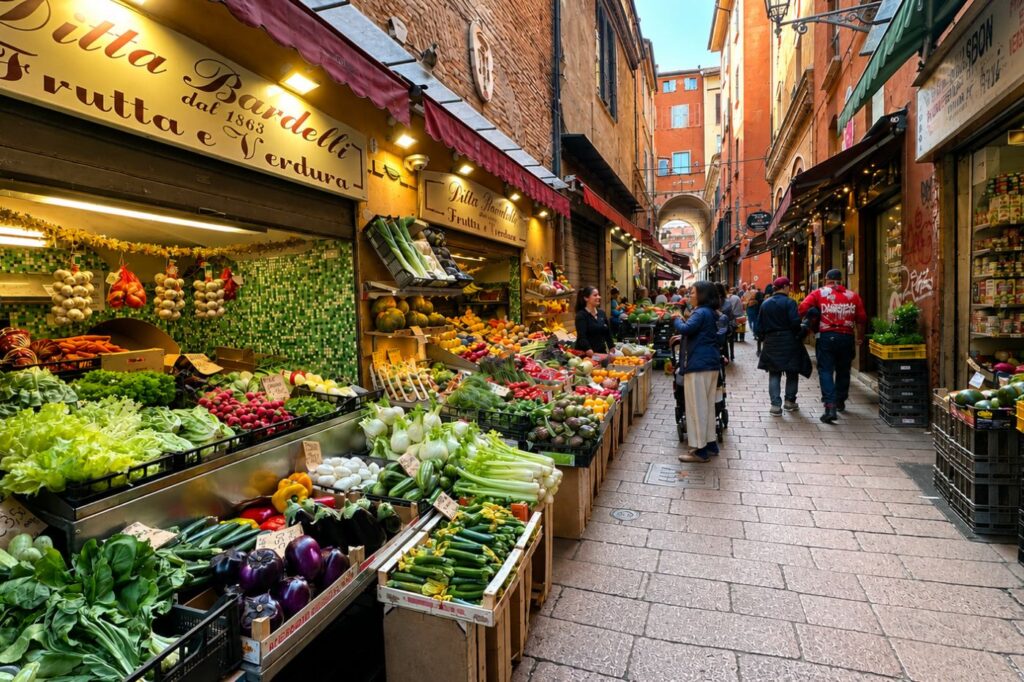
Between the 16th and 18th centuries, chronicles described the market as an extremely vibrant space, rich in scents, sounds, and colors. Goods were displayed directly on the street, while vendors and customers continuously crowded the shops.
Many merchant families passed their businesses down through generations, contributing to the historical continuity of the quarter.
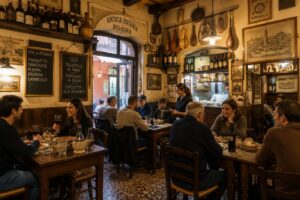
During this period, the Quadrilatero also consolidated its gastronomic reputation. Bologna became one of the Italian capitals of fine food, and the market’s shops gained fame far beyond the city walls. The area’s osterie were frequented by university students, travelers, aristocrats, and common people alike.
The Transformations Between the 19th and 20th Centuries
The 19th century brought significant urban changes to Bologna, but the Quadrilatero managed to preserve much of its medieval structure. While other areas were modernized, the market maintained its historical identity due to the complexity of its urban fabric, made of narrow streets and clustered buildings.
In the 20th century, however, the Quadrilatero went through a delicate phase. The rise of large-scale retail and changing consumer habits posed a threat for many traditional shops. As happened in numerous historic European markets, there were fears here too of a gradual loss of the area’s original identity.
Nevertheless, Bologna succeeded in preserving its historic market thanks to the strong bond between the city and its local gastronomic culture. The specialty food shops continued to represent a point of reference for the locals, keeping artisanal skills and commercial traditions alive.
Why the Quadrilatero Is One of the Best Places to Visit in Bologna
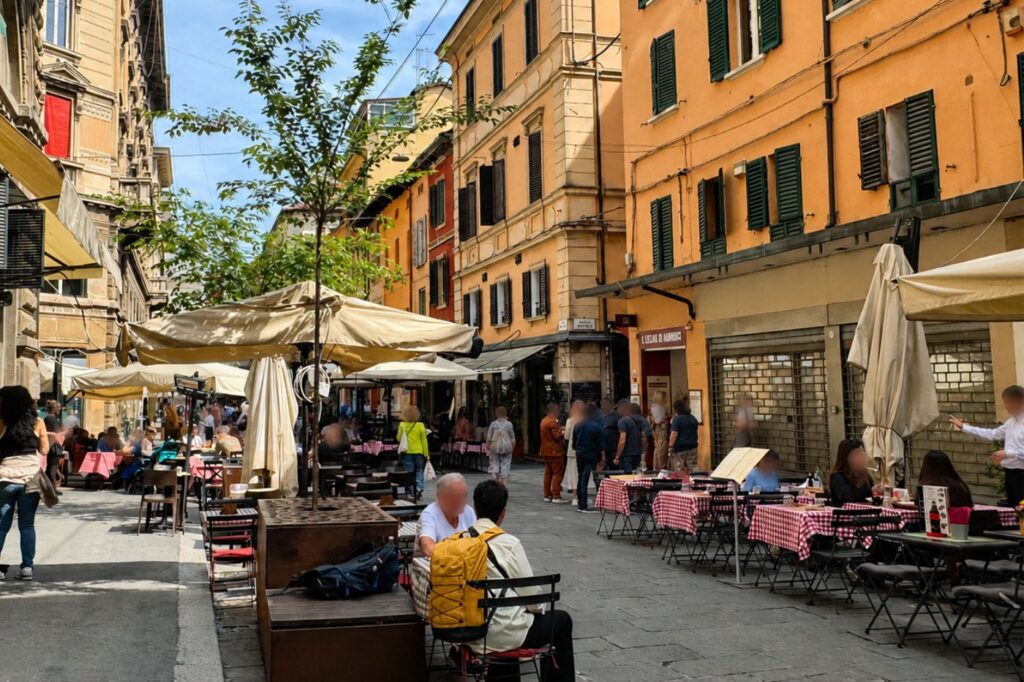
In recent decades, the Quadrilatero has become one of the emblematic destinations of food and wine tourism in Bologna. Every year, thousands of visitors walk through these streets to discover the authentic flavors of Emilian cuisine.
Despite the growth of tourism and the transformation of the historic center, the Quadrilatero continues to serve a practical function in everyday city life. In the morning, the shops are frequented by residents, restaurateurs, and local workers, while in the evening, the alleys fill with Italian and foreign visitors drawn by Bolognese cuisine and the atmosphere of the historic market.
In recent years, the area has experienced noticeable changes, with the opening of new venues and increasing tourist pressure that has partly altered the district’s commercial balance. Yet, the Quadrilatero still preserves the character of an authentic urban space, where the food commerce is not merely a tourist attraction but an everyday practice that continues to define the identity of Bologna’s historic center.