
Bologna’s Osterie: History, Traditions and Fun Facts of the Real Bologna
These were places where wine was poured by the glass, politics were debated, and relationships were forged. The history of these osterie captures the true soul of Bologna, one that goes far beyond its food scene
Visitors to Bologna are often drawn by its world-renowned cuisine and local specialties. However, simply tasting tortellini, tagliatelle al ragù, or mortadella is not enough to truly grasp the city’s soul.
To fully understand Bologna’s food culture, it is worth stepping into one of the places that for centuries represented the beating heart of everyday life: the osteria.
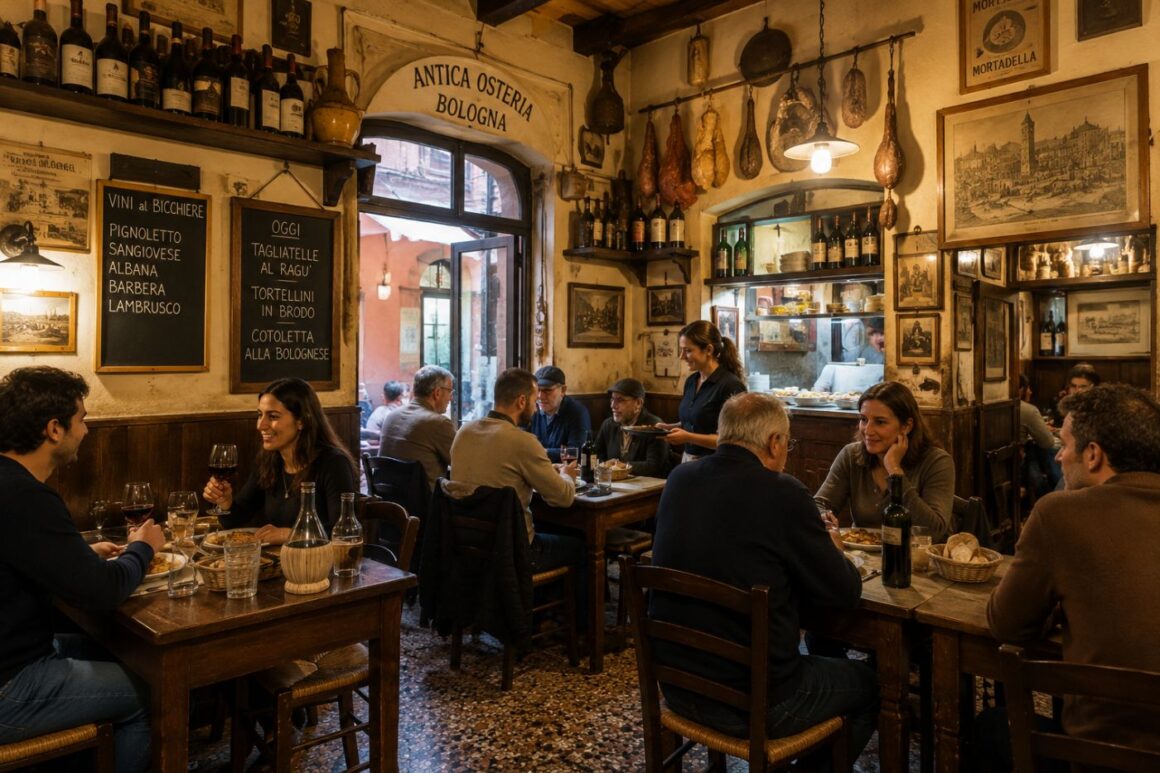
Bolognese osterie (taverns) originated as places to drink and socialize, frequented by merchants, students, artisans, and travelers. For a long time, wine took precedence over food, and community life revolved around shared tables, conversation, and strict rules imposed by city authorities. Only in more recent times did these venues take on the culinary role that we associate with Emilian tradition today.
What Are Bolognese Osterie?
Before evolving into restaurants dedicated to local cuisine, osterie were public establishments that sold wine and offered basic hospitality to residents and travellers passing through the city.
In the Middle Ages, they represented one of the most important spaces in urban life. This was a gathering place for university students, workers, merchants, and pilgrims. Here, business deals were closed, news was exchanged, and social bonds were formed.
In many ways, the osteria functioned as a cross between a wine tavern, a meeting place and a neighbourhood gathering spot.
The Medieval Origins of Osterie
The presence of inns and osterie in Bologna dates back to the Middle Ages. As home to the oldest continuously operating university in the Western world, the city attracted students and professors from all over Europe. They were joined by merchants, pilgrims, and laborers travelling along Northern Italy’s main trade routes.
These establishments met practical needs: providing wine, shelter, and, in some cases, simple food. Bread, cheeses, cured meats, and seasonal dishes made up most of what was on the menu.
Their location near city gates, markets, and high-traffic areas was no coincidence. In fact, osterie were an integral part of the urban economy, shaping the daily life of anyone arriving in or moving around the city.
How the Municipality Regulated Osterie
Over the centuries, the number of osterie grew considerably, prompting city authorities to regulate their business.
As early as the Communal Era (12th century), laws were in place governing prices, measurements, wine sales, operating hours, and public order. The municipality’s goal was to curb fraud, abuses, and behavior deemed problematic. This level of oversight proves just how important osterie had become, not only economically but socially as well.
Wine: The Heart of the Osteria
To truly understand the Bolognese osterie, one must start with the wine.
For centuries, daily wine consumption was far more widespread than it is today. Wine was a safe alternative to water, which was not always potable, and was considered an integral part of the daily diet.
In the osterie, people bought bulk wine, which often came from the Colli Bolognesi hills and the surrounding countryside. Wine lists and tastings as we know them today did not exist; the innkeeper personally knew the producers and suppliers, serving whatever came from the local area.
Many venues hung branches or leafy boughs (frasche) outside their doors to signal that wine was available. This very custom gave rise to the popular Italian expression “vendere vino alla frasca” (literally, “selling wine under the branch”), a phrase used in many parts of Italy.
A Place to Meet, Talk and Debate
Above all, osterie were places for socializing.
People from all walks of life crossed paths there, from university students and artisans to porters, merchants, professionals, and travellers. Together, they sat side by side to debate work, politics, local gossip, and business, while also playing cards and spending hours in each other’s company.
In an era before widespread newspapers, radio, or television, the osteria was also a primary space for spreading news. In many respects, it functioned as an indoor public square.
Sharing tables with strangers was a common practice, encouraged by the very layout of the venues and the highly collective nature of urban life.
Games, Morra, and Prohibitions
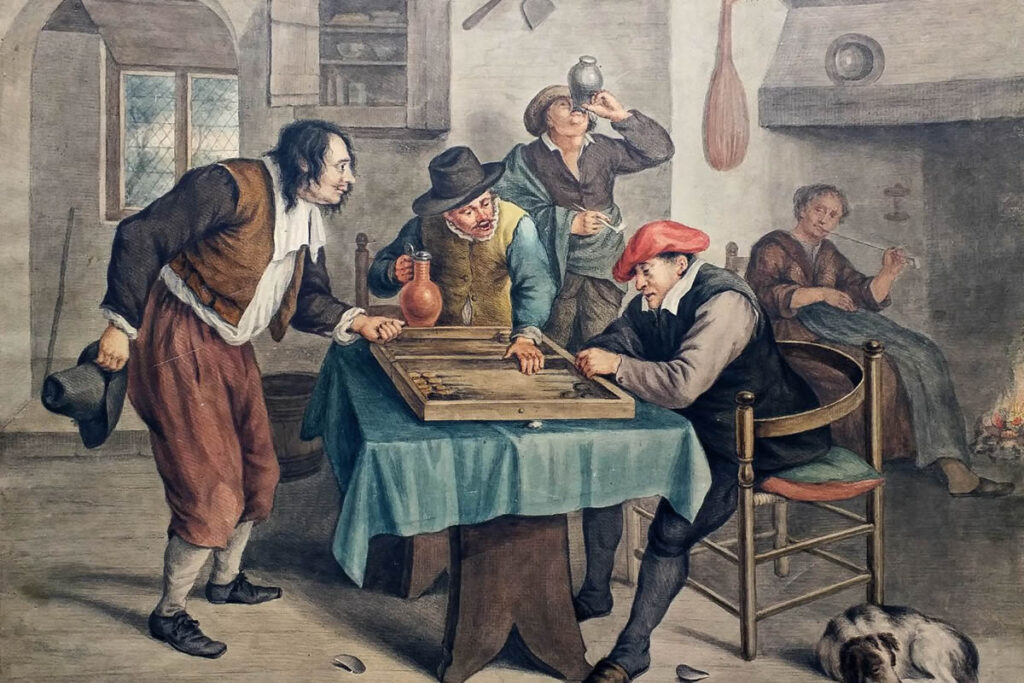
Card games and morra — an ancient game based on quick math and intuition — were among the most popular pastimes. However, authorities looked upon these activities with suspicion, especially when betting was involved. As a result, strict prohibitions and inspections were frequently introduced to curb behavior seen as a source of public disorder.
From Wine Glasses to Traditional Dishes
For centuries, food was not the main attraction in the osterie. Many customers would buy bread, cheeses, cured meats, and other items from nearby shops and eat them alongside the wine served by the innkeeper. This practice was especially popular among students and workers.
It was only between the 19th and 20th centuries that osterie began transforming into places to enjoy regular meals. This era saw the debut of the dishes that define Bolognese cuisine today: tagliatelle al ragù, tortellini in brodo, gramigna with sausage, boiled meats (bollito misto), and cotoletta alla bolognese.
The evolution of the osteria mirrors the changing city and the shifting culinary habits of its people.
The Connection to the Quadrilatero
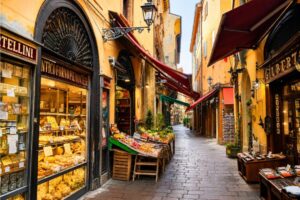
Many of Bologna’s most historic osterie sprouted within the Quadrilatero, the city’s medieval market district.
This neighbourhood was one of the city’s busiest commercial districts, home to food shops, delicatessens, fishmongers, butchers and merchants.
The osteria naturally became the meeting point for those buying fresh produce and anyone wanting to stop for a drink and a chat.
Even today, the Quadrilatero preserves this heritage, standing as one of the best places to understand the deep-rooted relationship between trade, gastronomy, and conviviality in the city’s history.
Osteria del Sole: A Living Tradition
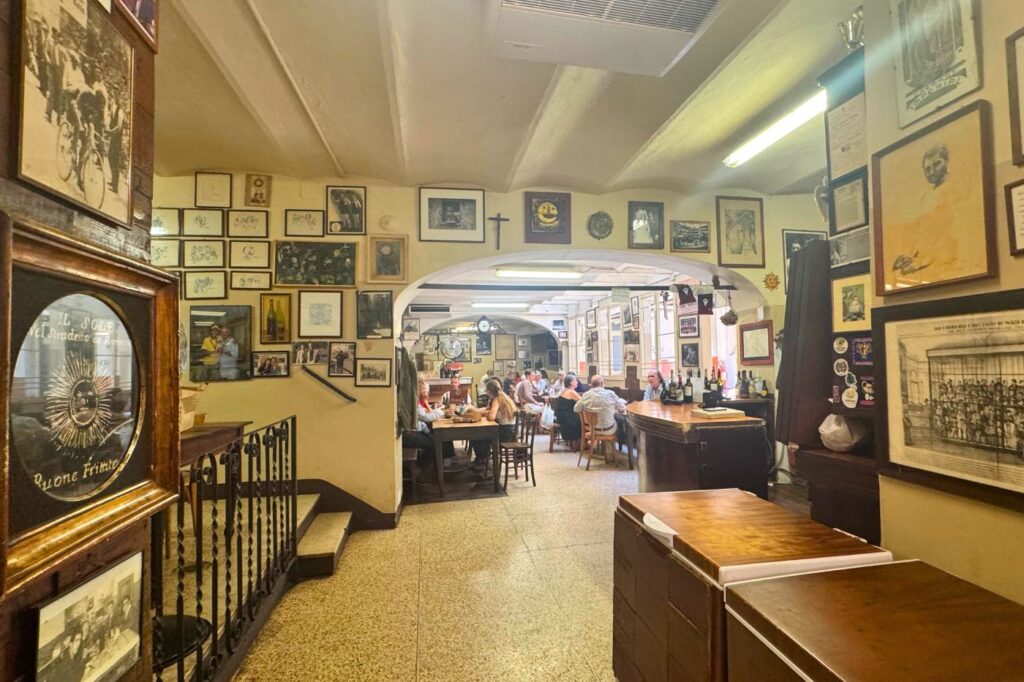
One of the most famous symbols of Bolognese tradition is the Osteria del Sole, in Vicolo Ranocchi 1/d. Founded in 1465, it is considered one of the oldest continuously operating osterie in Italy.
Its unique charm lies in having preserved a practice that directly echoes the past: here, you buy the wine, but you can bring your own food from the outside. Just as it was centuries ago, this is a tangible testament to the continuity between medieval and contemporary Bologna.
Why Osterie Still Embody the Real Bologna
Inevitably, many osterie have changed their purpose. Some have turned into restaurants, while others have adapted to the demands of modern tourism. Yet, they continue to safeguard a vital piece of the city’s identity.
Stepping into a historic osteria allows you to see Bologna from a different perspective that monuments and museums alone cannot provide. It reveals how wine, food and conviviality helped shape relationships, communities and traditions across generations.
For anyone wishing to truly know Bolognese food culture, osterie are far more than just places to eat or drink.
Don’t just rush in and out between sightseeing stops. Pause, take your time for a glass of wine and some traditional specialties, and just look around you.
Those walls and time-worn tables have seen generations of Bolognese people pass through. They have witnessed nights spent in good company, heated debates, friendships born over a glass of wine, and even love stories blossoming over a plate of tagliatelle.
In some of these very osterie, artists, musicians, and songwriters found the inspiration that would go on to shape Italian culture. Stepping inside means becoming part of a centuries-old story, if only for a few hours.