

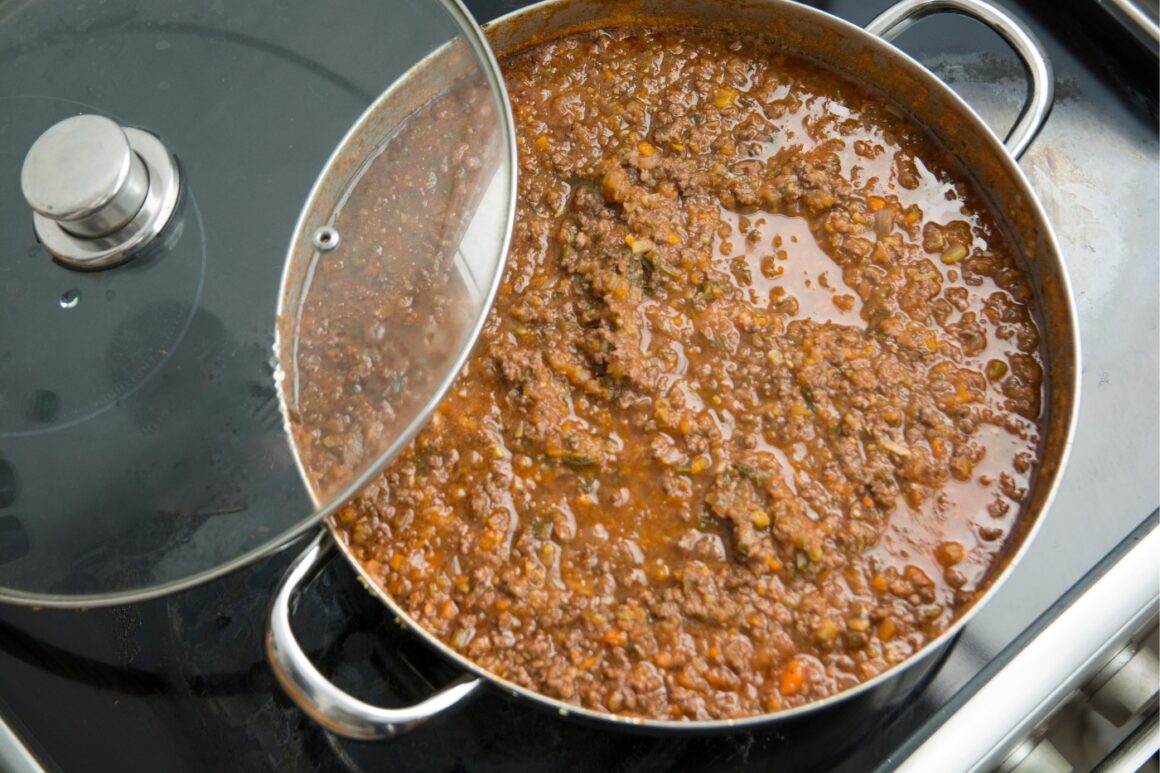
Ragù alla Bolognese: The Real Recipe and Its Origins
From its French roots to Italian cookbooks, all the way to its official codification: Ragù alla Bolognese is far more than a pasta sauce
«When you hear people speak of Bolognese cuisine, make a bow, for it deserves it».
With these words, in 1891, Pellegrino Artusi described Bologna and its gastronomy. A cuisine “a bit heavy” he wrote, but capable of nourishing well and long.
It is difficult to find a more fitting description of ragù alla bolognese, a condiment cherished for centuries and woven into the very fabric of memory and culture. For many foreigners it is simply “Bolognese sauce” but for the people of Bologna it is something deserving the utmost respect, a dish with a precise balance, built over time and defended with a certain stubbornness.
Before Ragù: When It Was “Ragoût”
The term “ragù” did not originate in Bologna, nor even in Italy. It derives from the French ragoût, a word appearing as early as the 17th century to describe a stewed preparation capable of “awakening the taste” (réveiller le goût).
Originally it had nothing to do with pasta. It was a cooking technique: meats, vegetables, or other ingredients left to simmer slowly, often with broth or wine.
The term reached Italy in the 18th century, as evidenced by the La Cuciniera Piemontese published in 1771, where ragù is described as a savory sauce used to whet the appetite. Even Vincenzo Corrado, in his book Il Cuoco Galante (1773), uses the term several times, always referring to stew-like preparations. It wasn’t yet the ragù we know today, but this is where it all began.
The Arrival of the Tomato and the Encounter with Pasta
Between the late 18th and 19th centuries, a change took place. The first combinations of ragù and tomato, initially in a very diluted form, began to appear in Italian cookbooks.
This was a fundamental turning point: ragù evolved from a standalone dish into a condiment. At the same time, its pairing with pasta became increasingly established, particularly in Naples, where “maccheroni alla napoletana” became one of the earliest expressions of this union between sauce and pasta. Bologna followed later, but in its own unique way.
Ragù in Bolognese Cookbooks
Leafing through 19th-century Bolognese recipe books, the term “ragù” does not yet appear clearly defined. It was Artusi himself, in his celebrated Science in the Kitchen and the Art of Eating Well, who described “maccheroni alla bolognese.”
The ingredients are already recognizable: butter, pancetta, meat, celery, carrot, onion, and broth. Only the tomato, in the form we know today, is missing.
This was a transitional phase: ragù existed, but had not yet acquired a stable name or a definitive form.
In the 20th century, ragù evolved alongside Italian society. As economic conditions improved, its preparation became richer, denser, less diluted. If in the18th century the sauce needed to be “stretched” to feed more people, the post-WWII period saw the opposite process: less liquids, more substance, and greater intensity.
It was during this period that pork, often in the form of pancetta, became a permanent fixture. Ragù ceased to be merely a domestic preparation and became a symbol, not only of Bologna but of Italian cuisine worldwide.
The Official Recipe: From 1982 to 2023
Despite the countless family variations, Bologna eventually decided to establish some fixed reference points.
On October 17, 1982, the Bolognese delegation of the Accademia Italiana della Cucina (Italian Academy of Cuisine) deposited the first official recipe for ragù at the Chamber of Commerce of the city. It was a symbolic yet significant gesture, transforming an oral tradition into a codified heritage.
In 2023, the recipe was updated. The main changes concerned the cut of meat (where coarsely ground beef pulp now replaces the traditional skirt cut) and the introduction of broth during cooking. Small modifications that reflect evolving habits and availability of ingredients.
The Real Ragù alla Bolognese Recipe (2023 Version)
The current version maintains a clear structure, with no concessions to ingredients foreign to the tradition.
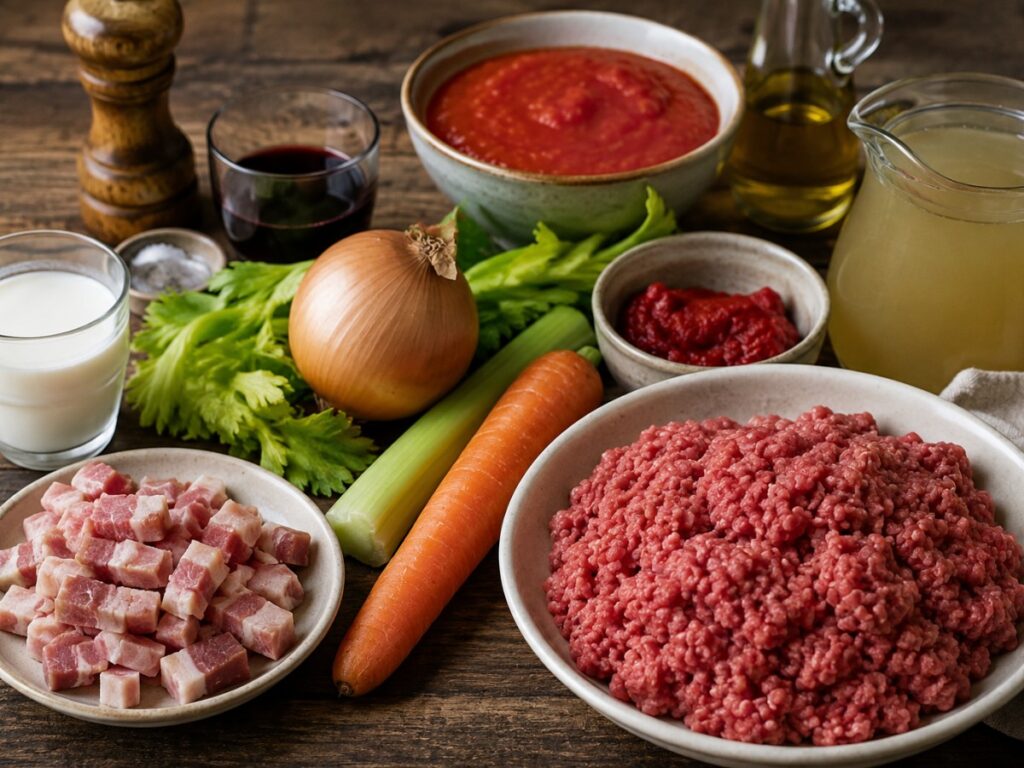
Ingredients
- 400 g coarsely ground beef pulp
- 150 g fresh pancetta
- onion, carrot, and celery
- wine (red or white)
- tomato purée and tomato paste
- broth
- milk (optional)
- extra virgin olive oil, salt, and pepper
Preparation
- Start with the base: finely chop the pancetta and vegetables; sauté them slowly until soft.
- Add the beef and brown it until it has released and reabsorbed its liquids.
- Add the wine to deglaze and deepen the flavour, allowing it to evaporate completely.
- Stir in the tomato and cook low and slow, for up to three hours.
- Halfway through cooking, milk may be added to soften the acidity and bind the flavors together.
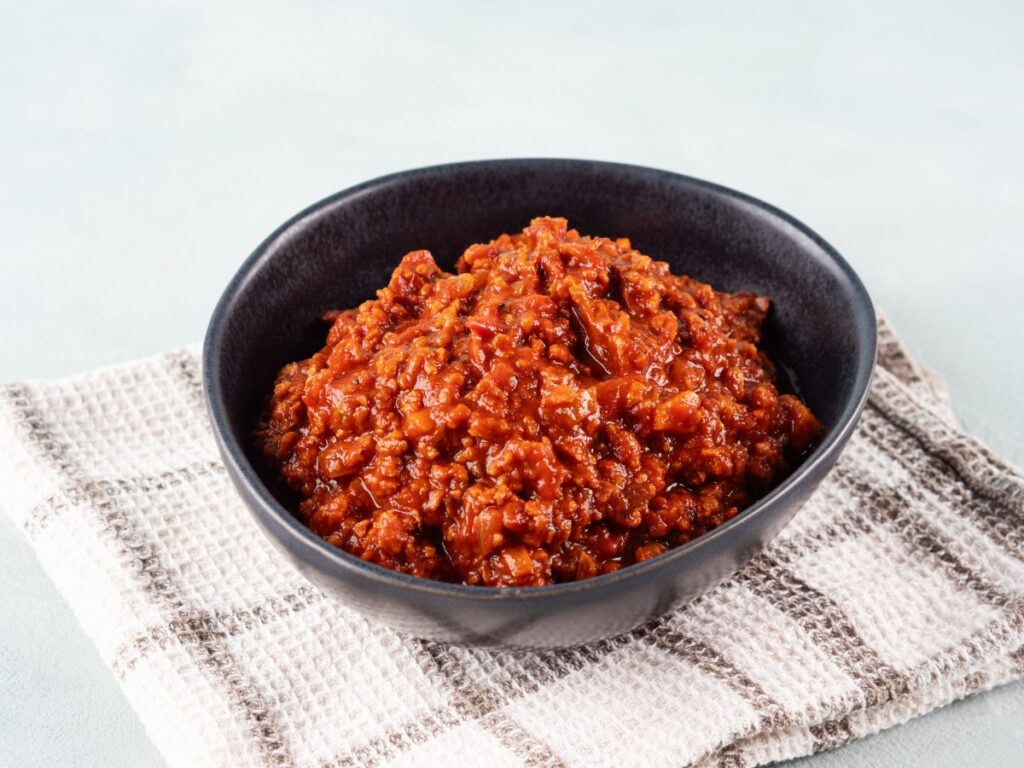
- The end result of the ragù should be dense, enveloping, and dark orange in color.
A Sauce That Is More Than Just a Sauce
It must be said that there is no single “perfect” recipe for ragù. Every family has its own version, every household its own balance. And yet, beyond all the differences, one element always remains constant: time. Ragù is a slow preparation, one that demands attention, but never haste.