
The Bolognese Salsamentari Platter: The History and Products of a Gastronomic Symbol

Mortadella, salame rosa, crescentine, friggione and much more: a journey through the platter that preserves the gastronomic soul of Bologna and instantly creates a festive atmosphere

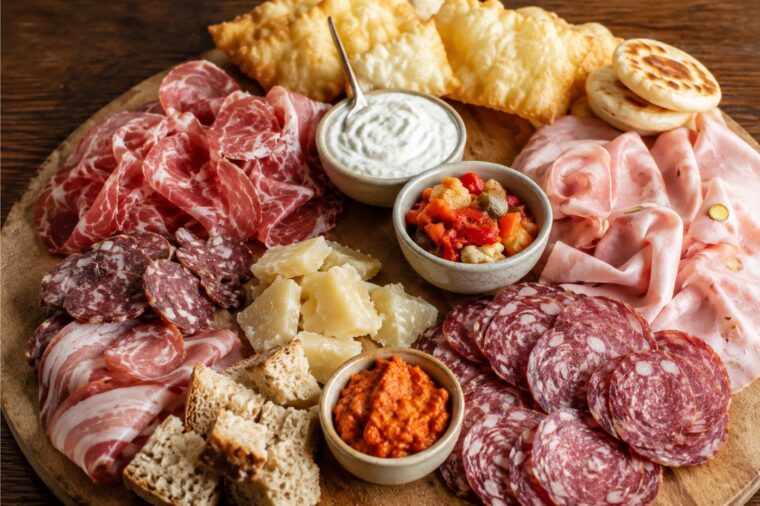
When we think of the Bolognese table, one of the most common images is certainly a large board of cured meats and cheeses accompanied by tigelle and crescentine. This is no mere appetizer; in Bologna, the tagliere is a narrative of the region and its history: a rural memory built on craftsmanship, shared labor and conviviality.

The so-called “Tagliere dei Salsamentari” (the official name of this charcuterie board) is so deeply tied to Bologna’s gastronomic identity that it has received the De.Co. (Municipal Designation of Origin) seal of approval, recognized by the Municipality of Bologna.

Behind this name lies a set of precise production standards promoted by the Mutua Salsamentari, a historic city institution tied to the local “norcina” culture (the art of pork butchery and conservation) and gastronomy. The goal is to promote products authentically rooted in the Bolognese metropolitan area and, more broadly, to the culinary heritage of Emilia-Romagna.

This is not merely a random assortment of cold cuts and cheeses, but a coherent ensemble of flavors that narrates centuries of local food history.

Who were the Salsamentari

To understand the meaning of this platter, one must look back in time to when Bologna was one of the most important cities for the trade of salt and preserved meats. The “salsamentari” were the artisans specialized in the processing, the preservation and sale of cured meats and salt-cured products.

Salt, already a precious commodity in medieval times, was essential for food preservation before the advent of refrigeration. Thanks to its strategic trading position and the “Salt Port” connected to the city’s waterways, Bologna became a major center for these crafts.

This gave rise to a gastronomic culture built around cured meats, preserves, slow-cooked preparations, and long-lasting products, many of which still appear on the traditional platters served in the city’s osterie today.

What is the “Tagliere dei Salsamentari De.Co.” 

The De.Co. recognition obtained in 2023 transformed the Tagliere dei Salsamentari into a true identity symbol of Bolognese cuisine.

The official production guidelines (disciplinare) establish that at least 70% of the products on the platter must originate from the Bologna metropolitan area or have a historically documented connection to it. The remaining portion may include other outstanding products from the from Emilia-Romagna region, provided they remain consistent with local gastronomic tradition.

The indispensable and non-negotiable centerpiece is Mortadella Bologna PGI (IGP), the undisputed “queen” of the Bolognese platter. Around it revolve historic cured meats, cheeses, traditional preparations and baked goods that may vary according to the season.
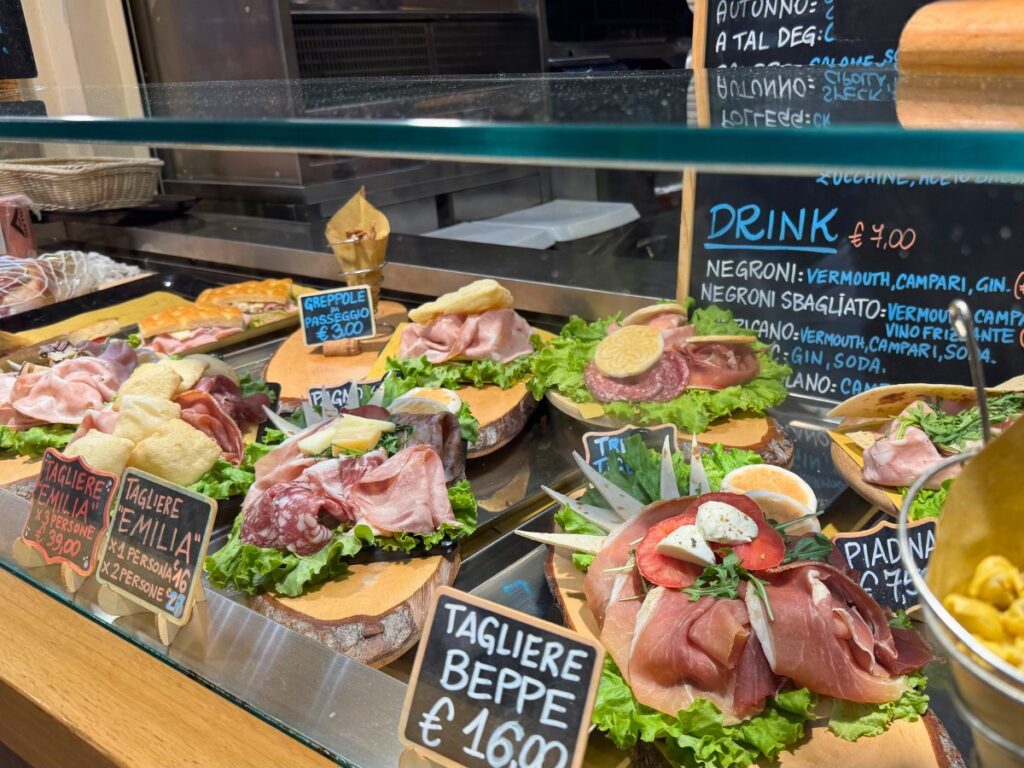
Display Case with Ready-Made Bolognese Platters (Foto © BFEX).

The Signature Products of the Bolognese Platter

The composition may vary from one venue to another, but certain products are however considered true classics of the tradition.

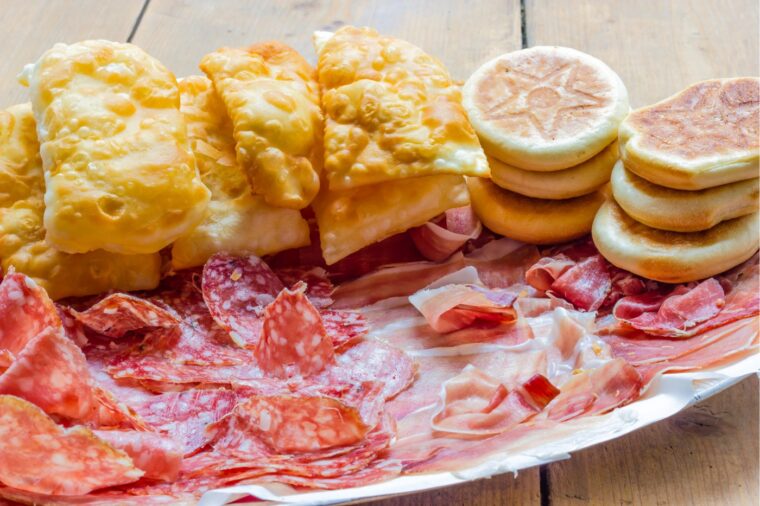
Among the cured meats are historic specialties such as salame rosa, coppa di testa (brawn), pancetta arrotolata (rolled pancetta), ciccioli campagnoli (fried pork cracklings), salame gentile, passita nostrana, porchetta, bondiola and cotechino. These are preparations that use every part of the pig “from the nose to the tail”, and reflect Emilia’s rural heritage. 

Alongside the cured meats are iconic local cheeses such as Parmigiano Reggiano PDO, squacquerone, pecorino from the Bolognese hills, mixed caciotte, and goat cheeses from the Apennines.

The platter is further enriched by traditional gastronomic preparations such as: friggione (onion and tomato dip), pickled vegetables (giardiniera), mortadella mousse, salsa verde and the classic spread pesto for the tigelle. 

Everything is accompanied by traditional Bolognese and Emilian baked specialties such as crescente, crescentine and tigelle.

A Platter That Changes with the Seasons 

One of the most interesting aspects of the Tagliere dei Salsamentari is its strong connection to seasonality, an element often overlooked when discussing cured meats and preserves.

During spring and summer, products such as salame gentile, porchetta, and friggione prepared with ripe tomatoes and summer onions become more prominent. Even the giardiniere follow the rhythms of the vegetable gardens of the Emilian plains.

With the arrival of autumn and winter, traditional cold-season specialties begin to appear: coppa di testa, ciccioli, cotechino, and bondiola, rich and hearty products rooted in the traditional home-based processing of pork.

This connection to the agricultural calendar ensures the platter remains a living tradition rather than a standardized formula.

Where to Taste the Tagliere dei Salsamentari in Bologna

Today, several local spots in Bologna display the official Mutua Salsamentari seal, which guarantees adherence to strict production standards and the quality of the ingredients used.

These locations are primarily historic taverns (osterie), gourmet food shops (botteghe) and wine bars (enoteche) that focus on promoting local products and rediscovering the city’s traditions.

For those visiting to Bologna, the Tagliere dei Salsamentari offers one of the most authentic ways to experience local cuisine beyond the usual tortellini or ragù. It is a gastronomic journey that introduces diners to ingredients, artisanal techniques and preparations often unfamiliar to the wider international public.

Behind every slice of mortadella, every crescentina, or spoonful of friggione lie ancient crafts, family rituals, and knowledge passed down through generations. The De.Co. certification serves not only to list specific products but to preserve the city’s culinary identity and protect consumers.
Tigelle and Crescentine: The Differences and the Tradition

Two names, one shared history, and a uniquely Emilian misunderstanding that tells a story far greater than a simple recipe

There is a moment, sitting at the table in a trattoria somewhere between Bologna and Modena, when a basket of small, warm breads arrives. Some people call them tigelle, others call them crescentine. For many, they are the same thing. In reality, they are not and understanding the difference is a way of truly entering the gastronomic culture of Emilia.

The Tigella and the Crescentina in Modena

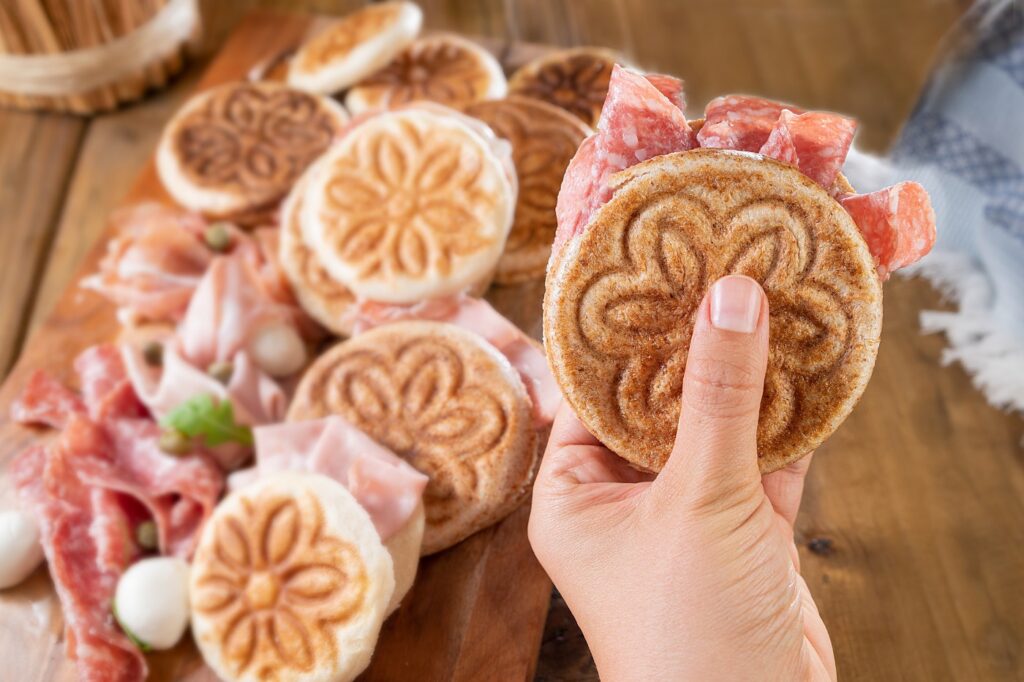
The starting point is simple: the word “tigella” was not originally used to describe the food itself, but rather the tool used to cook it. In the tradition of the Modenese Apennines, tigelle were small terracotta discs heated in the fireplace and used to cook the dough. The bread itself, therefore, was not the tigella, it was the “crescentina”, meaning the result of the cooking.

This is a linguistic detail, but not a minor one. As often happens in popular culinary traditions, the name of the object gradually came to stand for the food itself. Today, saying “tigelle” is perfectly normal, even in restaurants, but it is a relatively recent simplification.

The “true” crescentina from the Modena area was born as a mountain bread. Made with essential ingredients and a simple preparation, they were cooked directly over the fire. There were no ovens and no elaborate equipment: the terracotta tigelle allowed small discs of dough to be cooked quickly, leaving them soft on the inside and lightly crisp on the outside.

Over time, this bread has become one of the most recognizable symbols of Emilian conviviality.

Tigelle.

Tigelle and Crescentine in Bologna

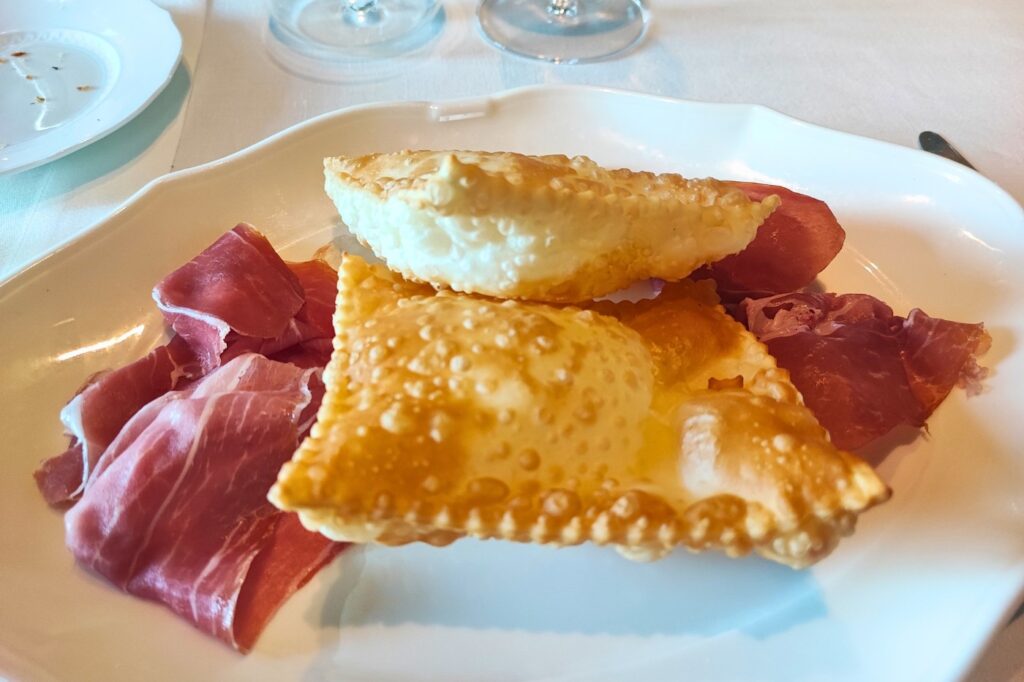
Then, as is often the case, geography complicates matters. Moving toward Bologna, the term “crescentina” changes in meaning. Here, it refers to a fried preparation: puffed, golden and closer to what in the Modenese area is called “gnocco fritto”.

Same name, completely different result.

This is one of those cases where cuisine explains better than any map how territories actually function: continuous, nuanced, never rigid.

In the meantime, the crescentine cooked in tigelle made their way down from the mountains to the city, establishing themselves firmly in the restaurant scene. Today you find them everywhere, often served in generous baskets alongside cured meats, cheeses, and spreads.

But the way of eating them has remained exactly as it always was. They are not plated individually or assembled in the kitchen. They are opened by hand, filled directly at the table, and shared. It is a simple gesture.

The crescentina bolognese, which in Modena is called gnocco fritto (Photo © BFE).

The fillings are those of the most direct Emilian tradition: mortadella, prosciutto, salami, fresh or aged cheeses. And then there is “pesto modenese”, a cream of lard, garlic, and rosemary, rooted in a rural cuisine that is surprisingly intense and deeply satisfying.

For visitors from outside the region, tigelle and crescentine are often among the very first local food experiences. They work because they are immediate, require no explaining, involve no complicated rituals, and allow you to taste several things at once.

And yet, behind this apparent simplicity lies a precise history: one made of tools that lent their names to food, of words that shift meaning across a few kilometers, of territories that overlap and blur into one another.

Calling them simply “bread” is not enough. Tigelle and crescentine are a perfect example of how Emilian cuisine manages to transform everyday necessity into cultural identity.

Ragù alla Bolognese: The Real Recipe and Its Origins

From its French roots to Italian cookbooks, all the way to its official codification: Ragù alla Bolognese is far more than a pasta sauce

«When you hear people speak of Bolognese cuisine, make a bow, for it deserves it».

With these words, in 1891, Pellegrino Artusi described Bologna and its gastronomy. A cuisine “a bit heavy” he wrote, but capable of nourishing well and long.

It is difficult to find a more fitting description of ragù alla bolognese, a condiment cherished for centuries and woven into the very fabric of memory and culture. For many foreigners it is simply “Bolognese sauce” but for the people of Bologna it is something deserving the utmost respect, a dish with a precise balance, built over time and defended with a certain stubbornness.

Before Ragù: When It Was “Ragoût”

The term “ragù” did not originate in Bologna, nor even in Italy. It derives from the French ragoût, a word appearing as early as the 17th century to describe a stewed preparation capable of “awakening the taste” (réveiller le goût).

Originally it had nothing to do with pasta. It was a cooking technique: meats, vegetables, or other ingredients left to simmer slowly, often with broth or wine.

The term reached Italy in the 18th century, as evidenced by the La Cuciniera Piemontese published in 1771, where ragù is described as a savory sauce used to whet the appetite. Even Vincenzo Corrado, in his book Il Cuoco Galante (1773), uses the term several times, always referring to stew-like preparations. It wasn’t yet the ragù we know today, but this is where it all began.

The Arrival of the Tomato and the Encounter with Pasta

Between the late 18th and 19th centuries, a change took place. The first combinations of ragù and tomato, initially in a very diluted form, began to appear in Italian cookbooks.

This was a fundamental turning point: ragù evolved from a standalone dish into a condiment. At the same time, its pairing with pasta became increasingly established, particularly in Naples, where “maccheroni alla napoletana” became one of the earliest expressions of this union between sauce and pasta. Bologna followed later, but in its own unique way.

Ragù in Bolognese Cookbooks

Leafing through 19th-century Bolognese recipe books, the term “ragù” does not yet appear clearly defined. It was Artusi himself, in his celebrated Science in the Kitchen and the Art of Eating Well, who described “maccheroni alla bolognese.”

The ingredients are already recognizable: butter, pancetta, meat, celery, carrot, onion, and broth. Only the tomato, in the form we know today, is missing.

This was a transitional phase: ragù existed, but had not yet acquired a stable name or a definitive form.

In the 20th century, ragù evolved alongside Italian society. As economic conditions improved, its preparation became richer, denser, less diluted. If in the18th century the sauce needed to be “stretched” to feed more people, the post-WWII period saw the opposite process: less liquids, more substance, and greater intensity.

It was during this period that pork, often in the form of pancetta, became a permanent fixture. Ragù ceased to be merely a domestic preparation and became a symbol, not only of Bologna but of Italian cuisine worldwide.

The Official Recipe: From 1982 to 2023

Despite the countless family variations, Bologna eventually decided to establish some fixed reference points.

On October 17, 1982, the Bolognese delegation of the Accademia Italiana della Cucina (Italian Academy of Cuisine) deposited the first official recipe for ragù at the Chamber of Commerce of the city. It was a symbolic yet significant gesture, transforming an oral tradition into a codified heritage.

In 2023, the recipe was updated. The main changes concerned the cut of meat (where coarsely ground beef pulp now replaces the traditional skirt cut) and the introduction of broth during cooking. Small modifications that reflect evolving habits and availability of ingredients.

The Real Ragù alla Bolognese Recipe (2023 Version)

The current version maintains a clear structure, with no concessions to ingredients foreign to the tradition.

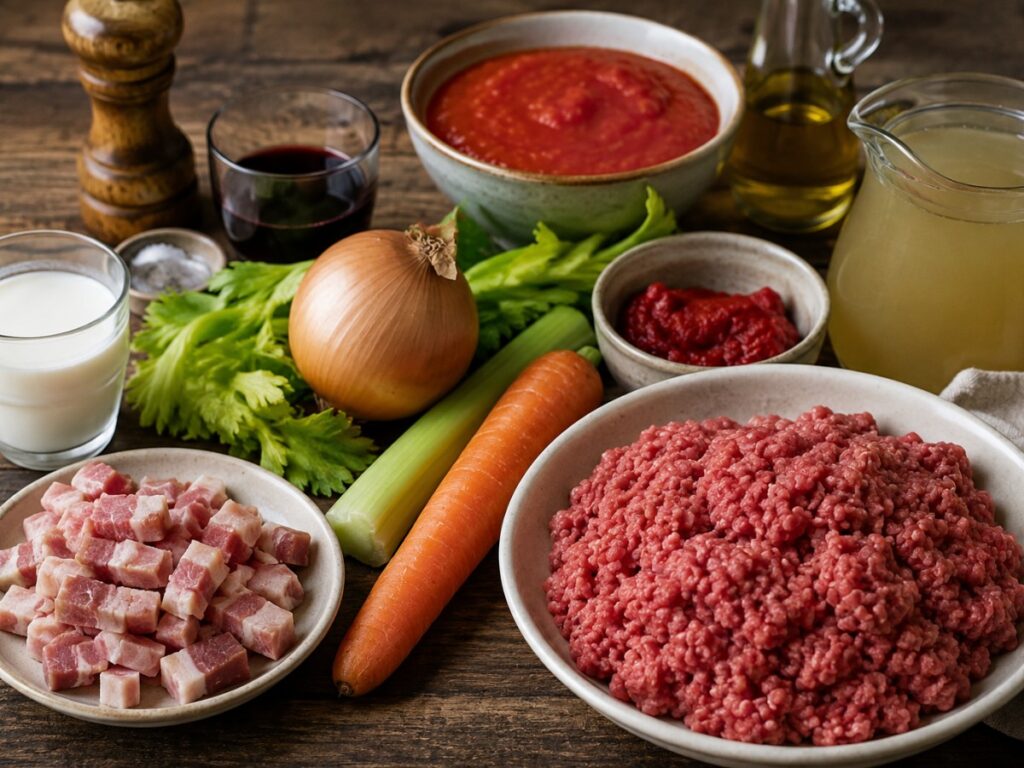
Ingredients

  • 400 g coarsely ground beef pulp
  • 150 g fresh pancetta
  • onion, carrot, and celery
  • wine (red or white)
  • tomato purée and tomato paste
  • broth
  • milk (optional)
  • extra virgin olive oil, salt, and pepper

Preparation

  1. Start with the base: finely chop the pancetta and vegetables; sauté them slowly until soft.
  2. Add the beef and brown it until it has released and reabsorbed its liquids.
  3. Add the wine to deglaze and deepen the flavour, allowing it to evaporate completely.
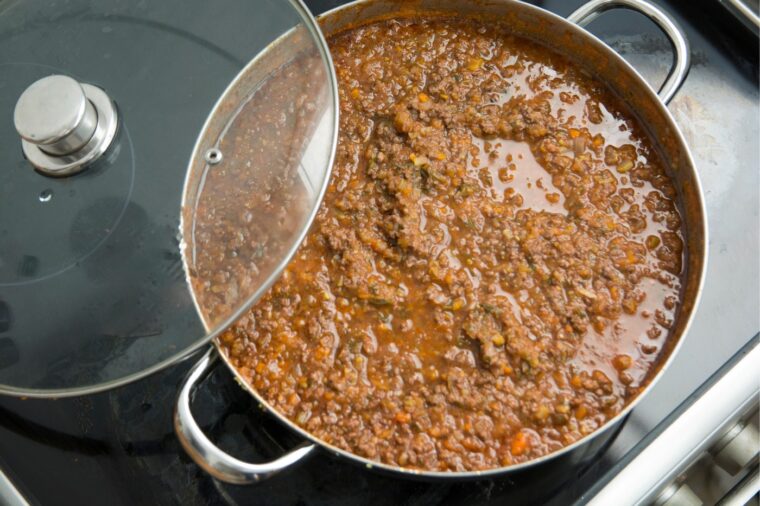
  4. Stir in the tomato and cook low and slow, for up to three hours.
  5. Halfway through cooking, milk may be added to soften the acidity and bind the flavors together.
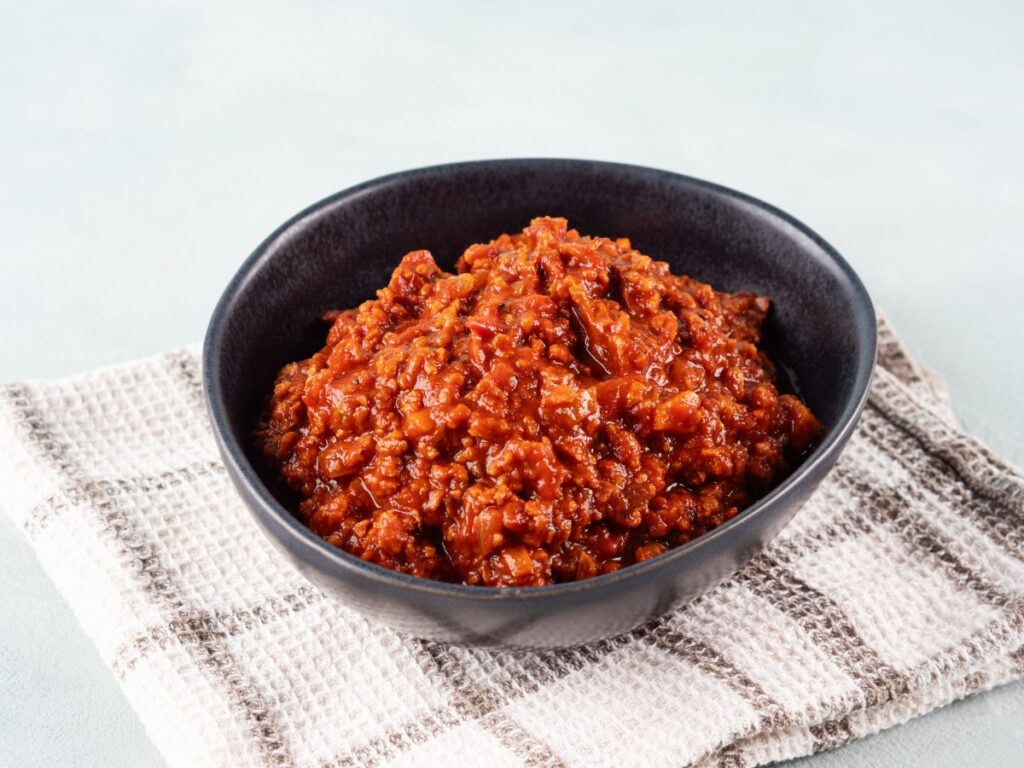
  6. The end result of the ragù should be dense, enveloping, and dark orange in color.

A Sauce That Is More Than Just a Sauce

It must be said that there is no single “perfect” recipe for ragù. Every family has its own version, every household its own balance. And yet, beyond all the differences, one element always remains constant: time. Ragù is a slow preparation, one that demands attention, but never haste.

Mortadella Bologna: The “Pink Queen” and its Irresistible Appeal

The History, craft and allure of one of Emilia-Romagna’s culinary icon

In Bologna, the local cuisine is characterized by aromas that linger in the memory longer than images.

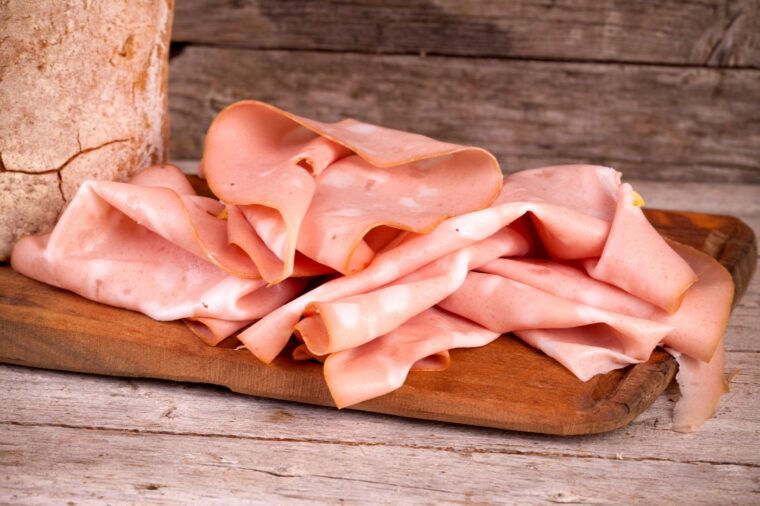
One of these is the scent of freshly sliced Mortadella in the city’s historic food shops, cut so thin it’s almost translucent. Its aroma is so delicate and lightly spiced that, together with its unmistakable pink hue, makes you want to reach out and taste it right then and there.

For many foreign visitors, it is a surprising discovery. They arrive with a generic idea of “mortadella,” often associated with industrial products, but when they taste the original version, they immediately realize it is an entirely different story.

A Cured Meat Born Before the Middle Ages

Mortadella is neither a recent invention nor a product of popular cuisine as we typically imagine it. Its origins date back to Ancient Rome, when pork was already being finely processed in mortars – from which, most likely, its name derives.

But it was in the Middle Ages that Bologna turned it into a symbol. The city, wealthy and well-organized, regulated its food trade with precision. In 1661, the Bolognese Senate established specific rules for the production of mortadella, a sort of early quality control standards that show how important, high-quality, and recognizable this product already was back then.

How Mortadella di Bologna Is Made

The difference between authentic mortadella and any imitation becomes clear from the very first bite, but its distinctive qualities actually take shape much earlier, that is, during the production process itself.

The pork meat is processed until it becomes an extremely fine, almost creamy mass. It is not a simple grinding; it’s an emulsion that requires precision and careful temperature control. To this base are added cubes of pork fat (lardelli), clearly visible in the slice, and a carefully balanced blend of spices.

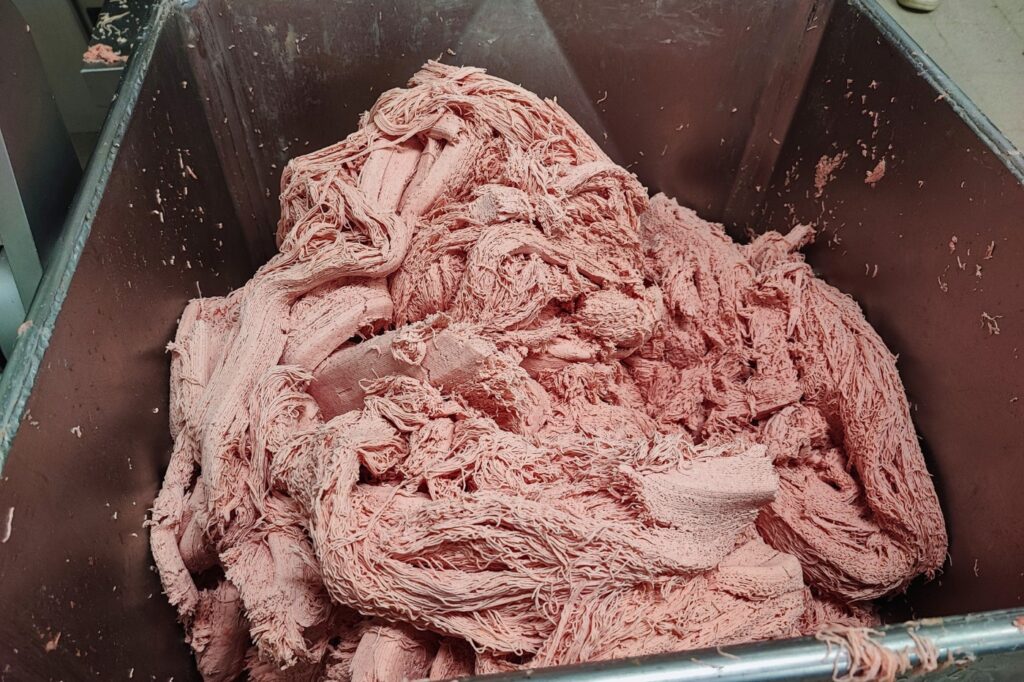
Mortadella meat finely emulsified before seasoning and cooking (Photo © BFEX).

The cooking process is slow and gradual, carried out in dry-air ovens. This is where balance is struck: too much heat would ruin the structure, while too little would prevent the aromas from developing. The result is a velvety consistency — firm but not rubbery —  with an elegant fragrance. It is a product of only apparent simplicity, built upon a refined technique.

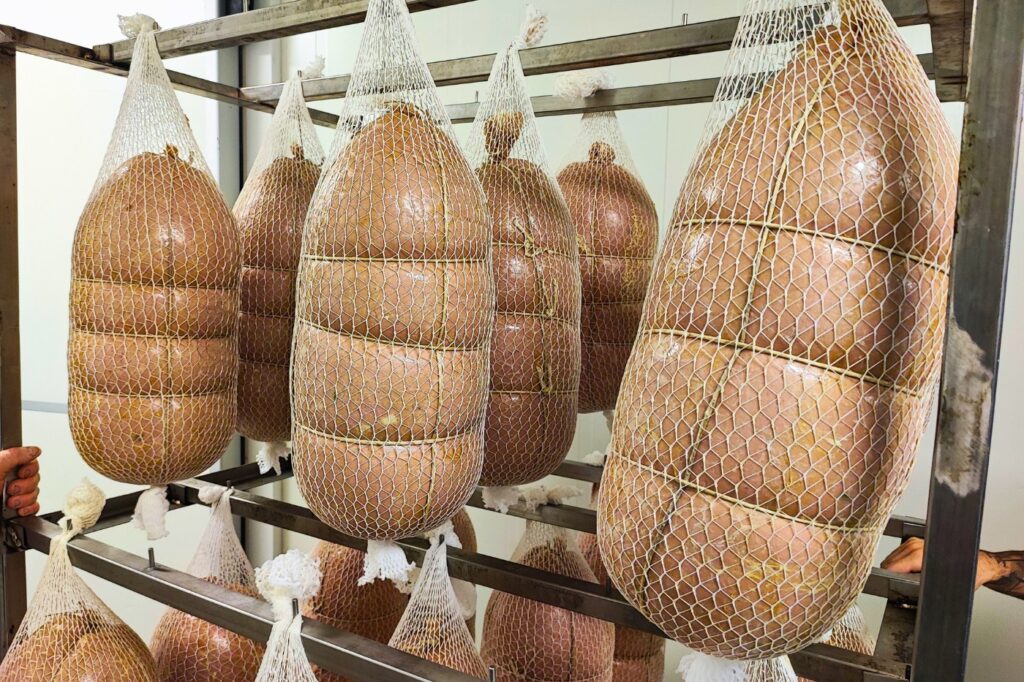
Mortadella ready for slow cooking and maturation (Photo © BFEX).

The Real Thing Is Not What You Imagine

One of the most striking aspects, especially for international visitors, is the contrast between authentic Mortadella di Bologna and the products bearing its name outside Italy. 

In the United States, for example, “bologna” has become a generic term for an inexpensive deli meat, often smoked, with a completely different texture and taste. The original version, on the other hand, is not smoked, not aggressive in flavor, and not overly salty. It has a natural sweetness and aromatic clarity that wins over anyone tasting it for the first time. 

Even the pistachio, frequently considered a traditional ingredient, is actually a modern variation, absent from the historical recipes.

A Certified Excellence Protecting the Consumer

Today, Mortadella di Bologna IGP is protected by the European Union under the Protected Geographical Indication (PGI) mark, a recognition that guarantees its origin and adherence to strict production standards. 

To obtain certification, the mortadella must be made from selected meats, follow codified processing techniques, and pass rigorous controls throughout the entire supply chain. Production is not limited exclusively to the city of Bologna, but extends to specific areas of Emilia-Romagna and neighboring regions historically tied to this tradition.

This regulatory system serves as a concrete guarantee of quality and authenticity, designed to protect consumers also from imitations that are especially widespread in international markets.

A Cultural Icon That Speaks to the World

Mortadella Bologna IGP is today one of Italy’s most exported cured meats. More than 160,000 tonnes are produced annually, with nearly half of that volume destined for foreign markets. 

The United States remains a key market, alongside Germany and France. In recent years, interest has also grown in Asia, where the appeal of Made in Italy is increasingly linked to the authenticity of the products.

How to Eat It in Bologna 

To truly understand mortadella, you have to think beyond the “quick sandwich.” In Bologna, it is served thinly sliced, often with the slicer set to its thinnest setting. The slice should almost fold on itself and melt in your mouth. It is paired with simple bread or warm crescentine, which bring out its softness.

And then there is the wine: a glass of Pignoletto, fresh and lightly aromatic, is the most natural pairing for mortadella. 

Mortadella is one of those products that tells the story of the city’s culinary soul, its everyday habits, its craftsmanship and method. Enjoy it in a traditional bottega, watch it being sliced, catch its aroma, and listen to the stories of those who make it.