
Pignoletto dei Colli Bolognesi: The Wine That Tells Bologna’s Story Beyond the City Walls
Fresh, straightforward, and deeply rooted in its territory: Pignoletto is the white wine that cheerfully accompanies Bolognese cuisine, revealing its more convivial side.
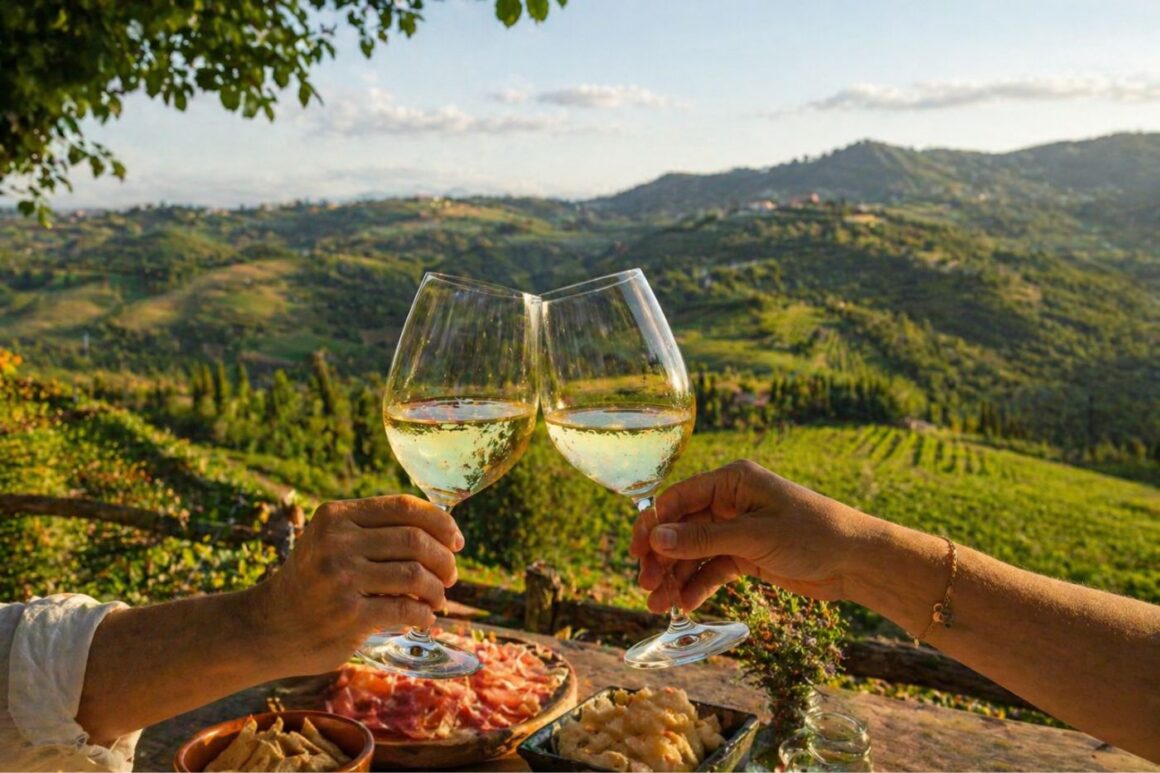
In Bologna, wine never arrives alone. It is accompanied by a board of cured meats, a basket of warm crescentine, a slice of freshly cut Mortadella and Parmigiano Reggiano. And most often, the wine in the glass is Pignoletto.
It lacks the international fame of Prosecco and the symbolic weight of the great Italian reds; yet, to truly understand the Bolognese table, one must also experience this lively white, which appears simple only to those who look at it on the surface.
The Territory: The Colli Bolognesi
Pignoletto originates in the hills surrounding Bologna, above all in the Colli Bolognesi. Just a few kilometers from the city center, the porticoes give way to vineyards, slopes, clay ravines, narrow country roads, and wineries that maintain a strong bond to their land. In this setting, Pignoletto finds its character: fresh, savory, and sometimes with a slightly bitter finish.
The Grape Variety and the Appellation
The name “Pignoletto” is generally linked to the shape of the grape cluster, which is compact and resembles a small pinecone (pigna in Italian).
The base variety is Grechetto Gentile, known locally as Alionzina. The production regulations for the DOCG Colli Bolognesi Pignoletto require at least 85% Grechetto Gentile, with the remaining portion coming from other non-aromatic white grapes. The appellation is protected by the Consorzio Vini Colli Bolognesi, which also promotes the wine’s dual nature: the frizzante and sparkling versions, which are more immediate, and the still versions, which are often more structured and better at expressing the character of the territory.
A Wine That Has Evolved Over Time
For a long time Pignoletto was considered a “house wine”, the bottle opened without much ceremony, tied more to daily life than to formal tasting. Today that image has changed, not because it has lost its approachability, but because many producers have focused on quality, aromatic precision, and the balance between freshness and structure.
The result is a more refined wine that retains its convivial nature and is no longer considered a “minor”.
The Different Styles of Pignoletto
In the glass, it can vary significantly depending on the version.
- The Frizzante Pignoletto (semi-sparkling) is the most popular and instinctive: agile, fresh, and perfect with cured meats and fried dishes.
- The Sparkling (Spumante) version features a more defined bubble.
- The Still (Fermo) version, on the other hand, is often the most interesting for those wishing to understand the territory; it is less direct, more gastronomic, and possesses a structure that can accompany first courses and cheeses.
Distinctive Traits and Pairings with Bolognese Cuisine
The common thread is that slightly bitter finish that makes Pignoletto recognizable and it should absolutely not be considered a flaw; rather, it is its signature. In a region where the cuisine tends to be rich, indulgent, and envolping, this final note helps cleanse the palate and invites another sip.
This is also why Pignoletto works so well with Bologna. Try it with mortadella, with crescentine and tigelle, but it will also surprise you alongside tortellini, tagliatelle, and stuffed pastas.
A Wine to Discover (Especially for Outsiders)
For foreigners, it is often a revelation. Many come to Bologna seeking ragù, tortellini, and Parmigiano Reggiano, but they do not immediately associate the city with an identity — defining wine like Pignoletto — a wine that reveals a Bologna that is not only “rich” and opulent, but also discreet, hilly and agricultural.
Pignoletto by the Numbers
Today, Pignoletto is a wine growing in stature as well as in figures. The Consorzio points to approximately 2,400 hectares under cultivation and 2,000 winegrowers involved in the protection and promotion of regional Pignoletto.
For the DOCG Colli Bolognesi Pignoletto specifically, the recent estimates speak of around 670 hectares of vineyards and over one million bottles produced annually.
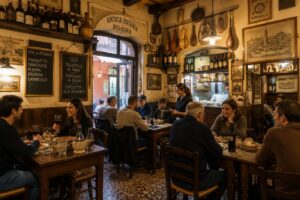
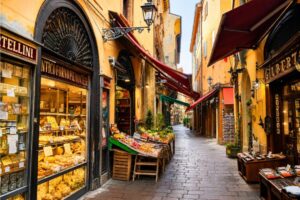
We look forward to welcoming you to share a glass of Pignoletto and a platter of cured meats. We can do so on one of our tours in a traditional bottega in the city center, or on a hillside at sunset, when Bologna is close enough to feel and far enough to see it better.