
Tigelle and Crescentine: The Differences and the Tradition
Two names, one shared history, and a uniquely Emilian misunderstanding that tells a story far greater than a simple recipe
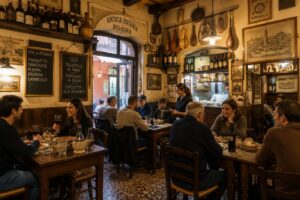
There is a moment, sitting at the table in a trattoria somewhere between Bologna and Modena, when a basket of small, warm breads arrives. Some people call them tigelle, others call them crescentine. For many, they are the same thing. In reality, they are not and understanding the difference is a way of truly entering the gastronomic culture of Emilia.
The Tigella and the Crescentina in Modena
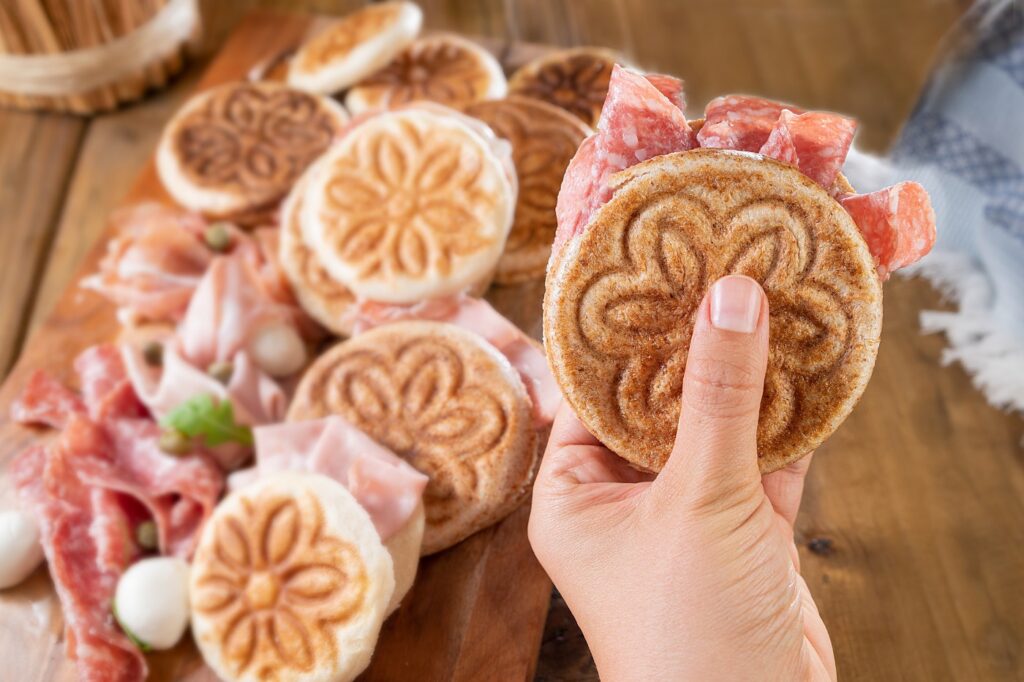
The starting point is simple: the word “tigella” was not originally used to describe the food itself, but rather the tool used to cook it. In the tradition of the Modenese Apennines, tigelle were small terracotta discs heated in the fireplace and used to cook the dough. The bread itself, therefore, was not the tigella, it was the “crescentina”, meaning the result of the cooking.
This is a linguistic detail, but not a minor one. As often happens in popular culinary traditions, the name of the object gradually came to stand for the food itself. Today, saying “tigelle” is perfectly normal, even in restaurants, but it is a relatively recent simplification.
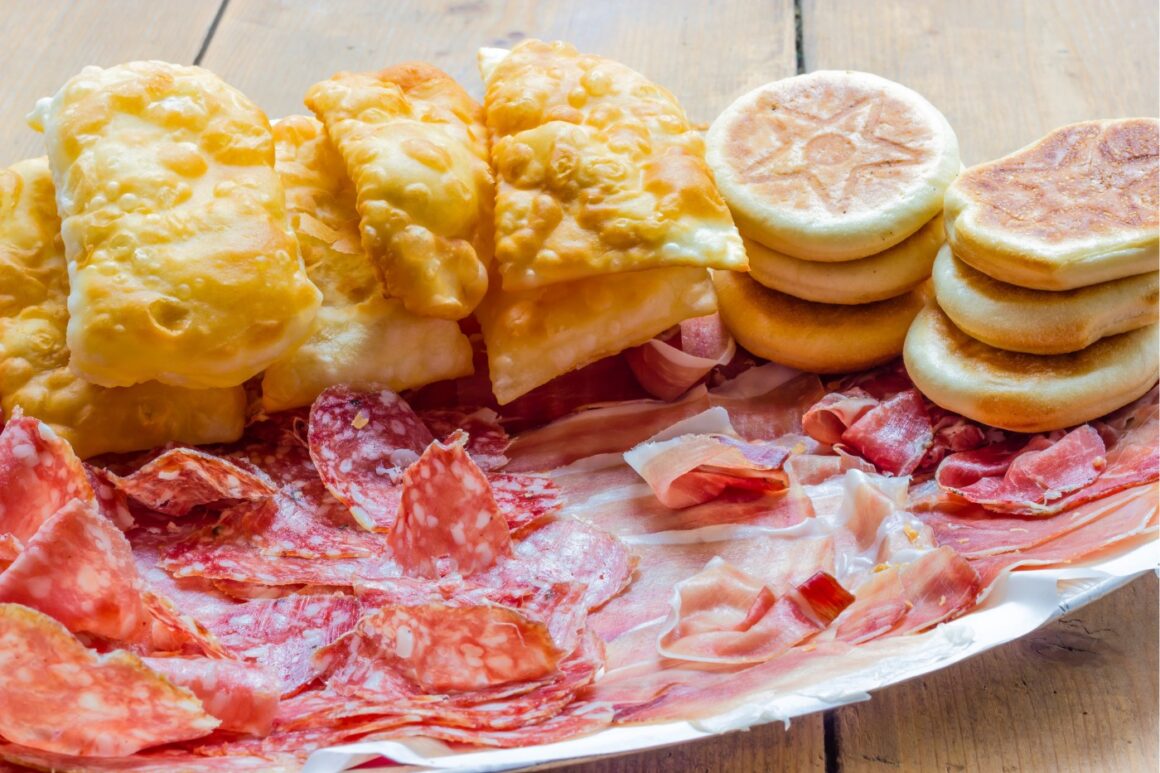
The “true” crescentina from the Modena area was born as a mountain bread. Made with essential ingredients and a simple preparation, they were cooked directly over the fire. There were no ovens and no elaborate equipment: the terracotta tigelle allowed small discs of dough to be cooked quickly, leaving them soft on the inside and lightly crisp on the outside.
Over time, this bread has become one of the most recognizable symbols of Emilian conviviality.
Tigelle and Crescentine in Bologna
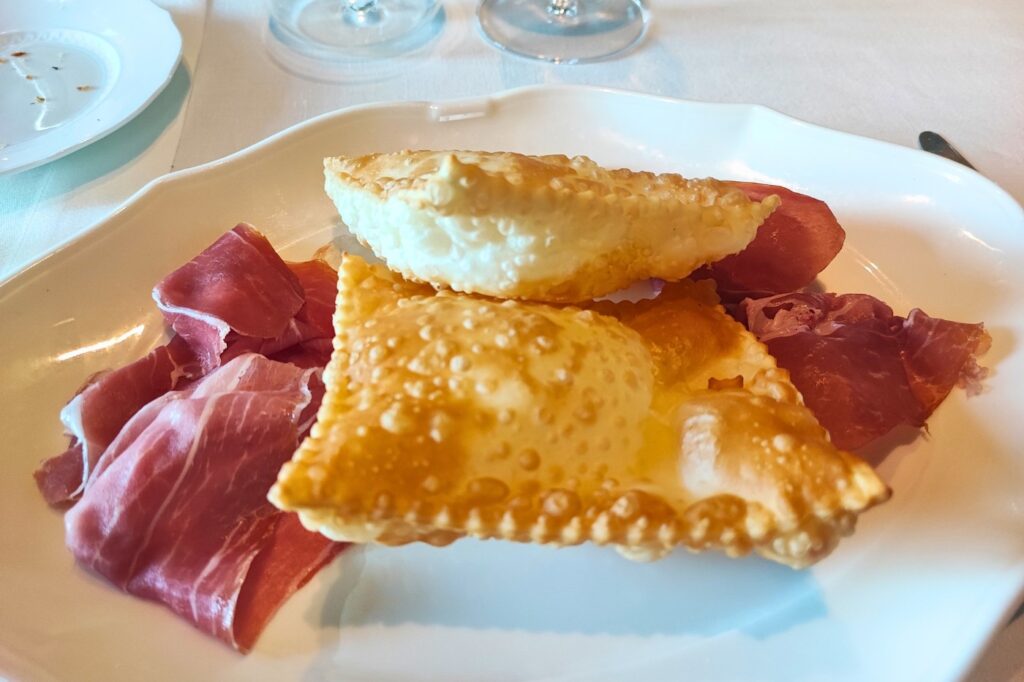
Then, as is often the case, geography complicates matters. Moving toward Bologna, the term “crescentina” changes in meaning. Here, it refers to a fried preparation: puffed, golden and closer to what in the Modenese area is called “gnocco fritto”.
Same name, completely different result.
This is one of those cases where cuisine explains better than any map how territories actually function: continuous, nuanced, never rigid.
In the meantime, the crescentine cooked in tigelle made their way down from the mountains to the city, establishing themselves firmly in the restaurant scene. Today you find them everywhere, often served in generous baskets alongside cured meats, cheeses, and spreads.
But the way of eating them has remained exactly as it always was. They are not plated individually or assembled in the kitchen. They are opened by hand, filled directly at the table, and shared. It is a simple gesture.
The fillings are those of the most direct Emilian tradition: mortadella, prosciutto, salami, fresh or aged cheeses. And then there is “pesto modenese”, a cream of lard, garlic, and rosemary, rooted in a rural cuisine that is surprisingly intense and deeply satisfying.
For visitors from outside the region, tigelle and crescentine are often among the very first local food experiences. They work because they are immediate, require no explaining, involve no complicated rituals, and allow you to taste several things at once.
And yet, behind this apparent simplicity lies a precise history: one made of tools that lent their names to food, of words that shift meaning across a few kilometers, of territories that overlap and blur into one another.
Calling them simply “bread” is not enough. Tigelle and crescentine are a perfect example of how Emilian cuisine manages to transform everyday necessity into cultural identity.